
When I brought home my new Labrador puppy at 60 days old, I was excited — but also completely confused about his health care and puppy worming schedule.I didn’t know what steps to take, which vaccines were needed, or how to properly protect him from common infections.
Worms are very common in puppies, especially at an early age. If they are not treated properly, they can cause poor growth, diarrhea, vomiting, anemia, and even life-threatening complications.
Many people, like me, love to adopt a puppy but don’t fully understand how to take proper care of their health. That’s why I decided to write an informative blog post so you can clearly learn:
- Why deworming is necessary
- The correct, timely puppy deworming schedule
- Deworming puppies — how often it should be done
- The most recommended schedule for deworming puppies
- The best medicines for deworming, such as anacur fenbendazole, and how they work
We will discuss all of these topics in detail in this blog post.
Why Deworming Is Important In Puppies ?
All the puppies are born with worms, Are you joking ?, No its truth. Even if they look very active and healthy.
Are all puppies born with worms?
Are you joking?
No — it’s true. Even if they look very active and healthy, most puppies are born with worms.
How Do Puppies Get Worms?
Puppies can get worms in the following ways:
- From their mother through the placenta during pregnancy
- Through their mother’s milk while breastfeeding
- From infected feces in their environment
- From fleas that carry worm larvae
Types of Intestinal Worms in Puppies
There are different types of intestinal worms, including:
- Roundworms
- Hookworms
- Tapeworms
- Whipworms
Puppies are especially vulnerable at a young age because their immune systems are weak and still developing day by day.
What Are the Benefits of Following a Proper Puppy Worming Schedule?
Following a strict and timely puppy worming schedule offers many benefits:
- Puppies gain healthy weight
- Their coats become healthy and shiny
- They do not develop a pot-bellied appearance
- They are protected from severe infections that can lead to anemia and weakness
For all these reasons, every responsible owner must follow a strict puppy worming schedule to ensure their puppy grows healthy and strong.
Correct Puppy Deworming Schedule (0–6 Months)
| Puppy Age | Deworming Frequency |
|---|---|
| 2 Weeks Old | First Dose |
| 4 Weeks Old | Second Dose |
| 6 Weeks Old | Third Dose |
| 8 Weeks Old | Fourth Dose |
| 10 Weeks Old | Fifth Dose |
| 12 Weeks Old | Sixth Dose |
| 3 to 6 Months | Once every month |
| After 6 Months | Once every 3 months (for life) |
What Are the Signs That Your Puppy Is Infected With Worms?
Sometimes puppies may not show any obvious symptoms. However, if you observe your puppy closely, you may notice the following signs:
- Pot-bellied appearance
- Diarrhea
- Vomiting
- Worms visible in the stool
- Scooting on the floor
- Weight loss
- Poor coat and skin quality
If you notice these symptoms, there is a high chance that your puppy may be infected with worms. I strongly recommend consulting your nearest veterinarian as soon as possible for proper diagnosis and treatment.
Safe and Effective Deworming Medicines for Puppies in India
There are many dewormers available in India. One commonly prescribed medicine is:
Panacur Fenbendazole
Anacur contains the active ingredient fenbendazole, which is a broad-spectrum dewormer.
It is effective against:
- Roundworms
- Hookworms
- Whipworms
- Some tapeworm species
Why Vets Prefer Anacur Fenbendazole
- Safe for young puppies
- Gentle on stomach
- Available as suspension (easy to give)
- Effective and affordable
Here are some of the Anacur Fenbendazole and other fenbendazole-based deworming products available in India that you might find useful when planning a puppy deworming schedule:
1. Panacur C Canine Dewormer
Panacur C Canine dewormer is widely vet-trusted dewormer containing fenbendazole, effective against common intestinal worms in puppies and dogs.
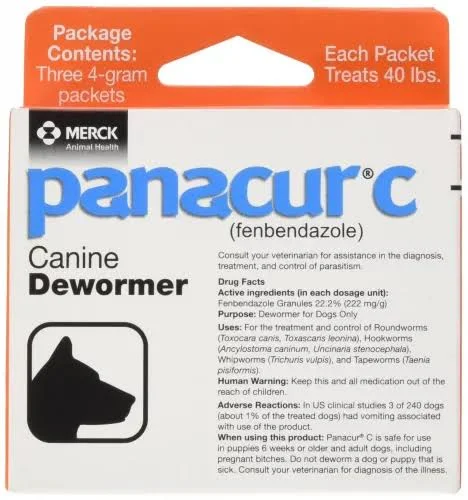
Panacur C Canine Dewormer contain fenbendazole as the active ingredient, but the exact packaging and formulation may differ (liquid, paste, granules). Dosage is commonly based on fenbendazole body-weight calculations:
- Routine intestinal worm treatment:
– Fenbendazole at approx. 22.7 mg per pound (50 mg per kg) body weight daily
– Typically given once daily for 3 consecutive days. - This means for a puppy weighing:
✔ 10 kg puppy → about 500 mg fenbendazole per day for 3 days
✔ 20 kg puppy → about 1000 mg per day for 3 days
2. Intas Eazypet Dog Deworming Tablet
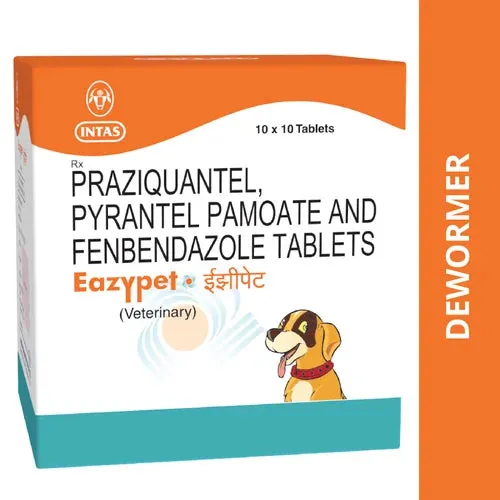
- This tablet contains a combination of praziquantel, pyrantel pamoate, and fenbendazole for broad-spectrum worm control.
- Typical dosage: Give 1 tablet for every 10 kg (22 lbs) of body weight.
- For best results, two oral doses are given two weeks apart, or use as directed by your veterinarian.
3. Virbac Milpro Dewormer for Dogs (above 5kg)
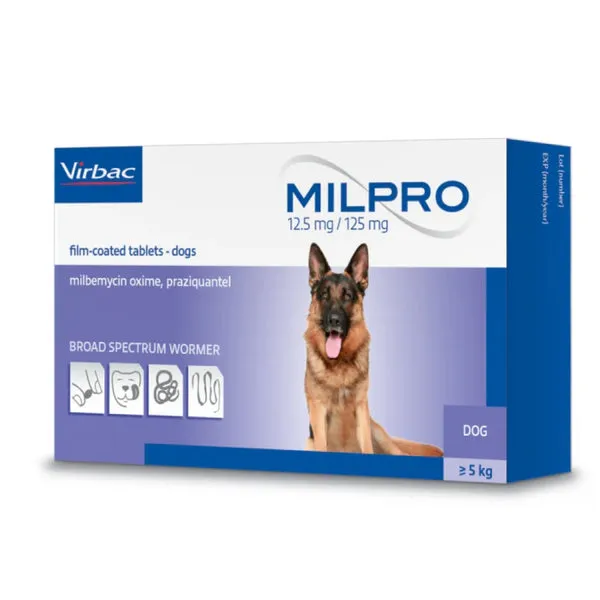
Milpro is a broad-spectrum wormer containing milbemycin and praziquantel in palatable tablet form, which offers protection against parasitic worms in small breed dogs & puppies.
Composition : Milbemycin Oxime, Praziquantel
Class: Dewormer
Uses:
- Treatment of mixed parasitic infestations by immature and adult Cestodes (Tapeworms) and adult Nematodes (Roundworms)
- Prevention of heartworm infestation, if concomitant treatment against Cestodes is indicated.
Directions for Use:
- 5 to 25 kg: 1 tablet
- >25 to 50 kg: 2 tablets
- >50 to 75 kg: 3 tablets
- Do not use in puppies less than 2 weeks of age of weighing less than 0.5 kg
Deworming is only the first step in protecting your puppy’s health. Once your puppy is properly dewormed, the next crucial step is vaccination — especially against deadly diseases like parvovirus.
To understand the full vaccination timeline and protection plan, read our detailed guide on Canine Parvovirus Vaccine: The Ultimate 2026 Guide for Indian Dog Parents.